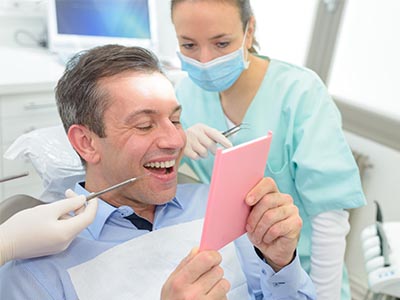
At Jolly Family Dental - Benton, we focus on restoring healthy, confident smiles for patients who have lost one or more teeth. Missing teeth can affect appearance, chewing function, and oral health, so we offer a range of restorative options designed to rebuild form and function in a way that fits each patient’s needs. Our approach emphasizes predictable results and long-term oral wellness.
When a tooth is lost, the change is rarely limited to how your smile looks. The surrounding teeth, gums, and jawbone all respond to the empty space, and those changes can alter how you chew, speak, and maintain oral hygiene. Over time these subtle shifts add up and can lead to more complex dental problems if left unaddressed.
Adjacent teeth tend to drift toward an unfilled space, which can create bite misalignment and increase wear on remaining teeth. Opposing teeth may over-erupt into the gap, creating further imbalance. These movement patterns can make proper cleaning more difficult and raise the risk of decay and gum disease.
Bone loss is another practical concern: without the stimulation provided by a tooth root, the jawbone can shrink where the tooth is missing. This not only affects facial support and aesthetics but can also complicate future restorative options. Replacing missing teeth proactively helps preserve oral structure and function.
Treatment for missing teeth is not one-size-fits-all. Contemporary dentistry offers multiple solutions — from removable appliances to fixed restorations — each with different advantages depending on the location of the gap, the health of the surrounding teeth, and a patient’s long-term goals. Choosing the right path begins with a thorough clinical examination and a clear conversation about expectations.
Some patients prioritize a non-invasive approach that preserves remaining teeth, while others want the most durable, natural-feeling option available. Factors such as gum health, bone volume, and adjacent tooth condition guide the recommended course of action. Our goal is to match the restoration method to the individual’s functional needs and lifestyle.
Regardless of which route you take, modern materials and laboratory techniques allow us to create restorations that closely mimic the color, shape, and translucency of natural teeth. The emphasis is on creating results that blend seamlessly with your smile while restoring reliable chewing performance and comfort.
A dental bridge is a fixed restorative solution that fills one or more missing-tooth spaces by anchoring prosthetic teeth to stable supports. Those supports can be natural teeth prepared to receive crowns or dental implants that serve as artificial roots. The primary purpose of a bridge is to restore chewing ability, prevent unwanted tooth movement, and maintain facial form.
Bridges are custom-crafted to fit the specific shape and coloring of your teeth. When supported by natural teeth, the adjacent teeth are shaped to allow crowns to sit snugly and securely. When supported by implants, the bridge can function without involving neighboring teeth, which is an important benefit for preserving healthy tooth structure.
Beyond function, a well-designed bridge improves aesthetics and restores confidence when smiling and speaking. Properly executed bridges distribute biting forces in a balanced way, which helps protect the remaining natural dentition from excessive wear and uneven stress.
There are several common bridge designs, and the right choice depends on clinical factors and treatment goals. Traditional fixed bridges are supported by crowns placed on adjacent teeth and are a dependable solution when those teeth are strong and healthy. Cantilever bridges are a variation used when support is available on only one side of the gap.
Implant-supported bridges replace missing teeth without relying on neighboring teeth for support. Because implants act like tooth roots, they can support a bridge that restores multiple adjacent teeth and help preserve jawbone integrity. This option is often recommended when long-term stability and bone preservation are priorities.
Maryland or resin-bonded bridges use a lightweight framework bonded to the backs of adjacent teeth and can be an option for certain front-tooth replacements where minimal alteration of healthy teeth is desired. Each type has trade-offs in terms of preparation, longevity, and suitability; we evaluate those trade-offs carefully during treatment planning.
Successful bridgework starts with ensuring the mouth is a healthy environment for a permanent restoration. That includes treating any active gum disease or tooth decay and evaluating the strength and bone support of the potential abutment teeth. If supporting teeth are compromised, alternative options such as implant support may be explored.
In cases where bone volume is insufficient for implants, bone grafting or other preparatory procedures can rebuild support and improve the long-term prognosis for a restoration. These preparatory steps are tailored to each patient and discussed in detail so you understand the sequence of care and expected healing times.
We also consider practical factors such as bite relationships and esthetic goals during preparation. Diagnostic records — including digital images and possibly 3D scans — help us design a restoration that fits well, looks natural, and functions reliably for years to come.
Receiving a traditional fixed bridge typically involves multiple visits. The process usually begins with an evaluation and treatment plan, followed by preparation of the abutment teeth. Preparation means carefully shaping those teeth so crowns can be fitted; impressions are then taken to guide the lab in fabricating the bridge.
While the permanent bridge is being made, a temporary restoration protects the prepared teeth and maintains appearance and function. Temporary crowns and bridges help you continue eating and speaking normally while the final restoration is finished with precise color matching and contouring in the lab.
At the final appointment, the permanent bridge is tried in, adjusted for fit and bite, and then cemented into place. We check occlusion and make any necessary refinements so the restoration feels comfortable. With proper care — regular checkups and good home hygiene — a well-made traditional bridge can provide many years of service.
Implant-supported bridges begin with surgical placement of dental implants into the jawbone. This is performed under local anesthesia and, if appropriate, sedation options to keep you comfortable. The number of implants and surgical approach depend on how many teeth need replacement and the condition of the supporting bone.
After implant placement, a healing period allows the implants to integrate with bone. During this time you may receive a provisional restoration to maintain appearance and chewing ability. Once integration is complete, the final bridge is attached, creating a stable, natural-feeling restoration that does not depend on adjacent teeth for support.
Implant-supported solutions offer several advantages: improved chewing efficiency, preservation of jawbone, and a long-term predictable outcome when combined with proper oral hygiene and routine maintenance. Our team guides patients through each stage — from pre-surgical planning and imaging to post-operative care — to ensure a smooth, informed experience.
Whether you’re considering a traditional bridge or an implant-supported option, understanding the choices and what to expect helps you make a confident decision about your care. Our team provides individualized guidance, precise planning, and careful execution to help restore both function and appearance. Contact us to learn more about how a dental bridge could be part of your path back to a complete, healthy smile.


A dental bridge is a fixed restorative appliance that replaces one or more missing teeth by spanning the gap with prosthetic teeth anchored to adjacent structures. It can be supported by natural teeth prepared for crowns or by dental implants that act as artificial roots. Bridges restore appearance and chewing function and help prevent movement of neighboring teeth. They are custom crafted to match color, shape and bite for a natural look and feel.
Beyond aesthetics, a properly designed bridge helps distribute biting forces in a balanced way to protect the remaining dentition. Bridges also help maintain facial support by filling the space left by missing teeth, which can prevent changes in facial appearance over time. Long-term success depends on precise fit, material quality and consistent oral hygiene.
Common bridge designs include traditional fixed bridges, cantilever bridges, Maryland (resin-bonded) bridges and implant-supported bridges. Traditional bridges rely on crowns placed on adjacent teeth while cantilever bridges anchor to one side of a gap. Maryland bridges use a bonded framework attached to the backs of neighboring teeth and are often considered for front-tooth replacements where minimal alteration is desired. Implant-supported bridges are secured to dental implants and do not depend on adjacent teeth for support.
Each design has trade-offs in terms of tooth preparation, longevity and suitability based on the location and number of missing teeth. Clinical factors such as gum health, bone volume and the condition of potential abutment teeth guide the recommendation for one type over another. Advances in materials and laboratory techniques allow excellent aesthetic matching across bridge types.
Candidates for a dental bridge typically have good oral hygiene, healthy gums and sufficient support in the teeth or jawbone adjacent to the gap. If neighboring teeth are strong and free of extensive decay, a traditional bridge may be appropriate. When adjacent support is inadequate, implant-supported options that preserve healthy tooth structure are often considered.
At Jolly Family Dental - Benton the clinical team performs diagnostic imaging and a comprehensive exam to assess candidacy and outline appropriate preparatory treatments. Preparatory care can include managing gum disease, restoring decayed teeth or performing bone grafting to create a stable foundation for the restoration. The overall objective is to recommend a solution that meets functional needs while preserving long-term oral health.
Placement of a traditional bridge begins with a treatment plan based on a clinical exam and diagnostic records such as X-rays or digital scans. The abutment teeth are carefully prepared by removing a precise amount of tooth structure so crowns can fit properly, and impressions are taken to guide laboratory fabrication. A temporary bridge protects the prepared teeth and maintains aesthetics and function while the final restoration is being made.
At the placement visit the permanent bridge is tried in, adjusted for fit and occlusion, and then cemented into place with careful verification of bite relationships. The dentist will review oral hygiene routines and any special instructions for the restored area to promote healing and longevity. Regular checkups allow the team to monitor the bridge and address wear or maintenance needs over time.
An implant-supported bridge starts with surgical placement of implants into the jawbone, performed under local anesthesia and sedation options if appropriate. Following surgery a healing period allows the implants to osseointegrate with bone, during which provisional restorations can preserve appearance and chewing ability. Successful integration is essential for the long-term stability and function of the implant-supported bridge.
Once healing is complete the final bridge is attached to the implants and adjusted for comfortable bite and natural appearance. This approach preserves adjacent teeth because it does not require crowning neighboring teeth for support, and it helps maintain jawbone volume by transferring chewing forces to the implants. Long-term success relies on consistent home care and regular professional maintenance to protect both implants and surrounding tissue.
Daily cleaning with a soft-bristled brush and fluoride toothpaste is the foundation of home care for a bridge and the supporting teeth. Cleaning beneath pontics is critical and can be accomplished with floss threaders, interdental brushes or specialized bridge floss to remove trapped debris. Proper technique reduces the risk of decay on abutment teeth and helps prevent gum inflammation.
Professional cleanings and periodic exams allow your dentist to check the fit of the bridge, monitor gum health and detect wear or early problems. If you notice looseness, sensitivity or changes in bite you should schedule an evaluation promptly so conservative repairs can be considered. Addressing issues early often prevents progression to more extensive treatment.
The lifespan of a dental bridge varies with the type of bridge, the materials used, oral hygiene and individual habits such as grinding or chewing hard foods. Many traditional bridges provide reliable service for a decade or longer when well cared for, and implant-supported bridges can offer even greater long-term stability when implants integrate successfully. Factors such as recurrent decay on abutment teeth, periodontal disease or excessive occlusal forces can shorten this timeframe.
Regular dental visits allow the team to identify early signs of wear or complications and to perform maintenance that extends the restoration's service life. When repair is not feasible a planned replacement can restore function with minimal disruption to oral health. A proactive maintenance plan tailored to your situation is the best way to maximize longevity.
Potential risks associated with dental bridges include sensitivity, decay on abutment teeth, gum inflammation and mechanical wear or fracture of the prosthetic components. If supporting teeth are weakened or if gum disease is present, the likelihood of complications increases over time. Thorough assessment and appropriate preparatory care help reduce these risks.
Prevention focuses on meticulous home hygiene, routine professional care and managing contributing factors such as bruxism or poor periodontal health. Your dentist may recommend specific tools or protective strategies, such as nightguards, to protect the restoration and surrounding teeth. Timely interventions and conservative repairs typically limit the need for more invasive procedures later.
Deciding between a bridge and an implant depends on clinical conditions including the location of the missing tooth, the health of adjacent teeth and the volume of available jawbone. Bridges are often efficient when neighboring teeth already require crowns, while implants preserve adjacent tooth structure but require sufficient bone and a surgical approach. The expected longevity, maintenance requirements and aesthetic priorities also factor into the decision.
Diagnostic imaging and a thorough clinical exam provide objective information to compare options and plan any necessary preparatory work. Your dental team will explain the advantages and limitations of each choice so you can make an informed decision aligned with your oral health goals. A collaborative approach ensures the selected treatment balances function, appearance and long-term oral wellness.
During the initial consultation at Jolly Family Dental - Benton a clinician reviews your medical and dental history, examines the oral tissues and takes diagnostic images to evaluate bone, tooth and periodontal status. This evaluation identifies any conditions that must be addressed before restorative work, such as active decay or gum disease. It also clarifies whether additional imaging or specialist referrals are needed to plan the most predictable restoration.
The dentist will discuss recommended treatment options, outline the sequence of care and explain what you can expect during healing and follow-up visits. You will receive guidance on homecare measures to prepare for treatment and on how to care for the restoration afterwards. After you review the plan the team will schedule the necessary appointments to move forward in a coordinated and informed way.

Have Questions or Need an Appointment?
We’re here to help! Whether you want to schedule a visit, ask about services, or just learn more about your dental care options, our team is ready to assist. Click below to contact us and take the next step toward a healthier, brighter smile.
We value every patient and strive to make reaching us easy and convenient. From answering your questions to guiding you through insurance and scheduling, our friendly staff is committed to providing a seamless experience. Let’s work together to keep your smile healthy and confident—get in touch today!